If you’re searching for Sendlane alternatives, you’re in the right place. Sendlane is a solid email and SMS marketing tool for ecommerce brands, but many users run into the same issues: the pricing increases too rapidly, there’s no free plan, and the platform can feel harder to learn than expected. These points show up often in Sendlane reviews, especially from brands that send a lot of emails each month.
Moreover, Sendlane pricing is based on how many emails you send, not how many contacts you have. This works well for some businesses, but for many others, it becomes unpredictable or simply too expensive. Add a few deliverability concerns reported during busy periods like Black Friday, and it makes sense that people want to compare their options.
In this guide, we break down the eleven best Sendlane alternatives for 2026. Each tool offers different strengths in pricing, automation, and overall ease of use, so you’re able to find the one that fits your goals and budget.
Why look for a Sendlane alternative?
Sendlane gives ecommerce brands a strong grounding with email, SMS, automations, deep Shopify data sync, and responsive support. However, depending on your business size or the frequency of your mailings, it may not be the most efficient option in the long term. Here are the most common reasons users start looking elsewhere.
Sendlane pricing is built for volume, not value
Sendlane pricing follows a CPM model, where you pay based on the number of emails you send each month, rather than solely on subscriber count. The idea is flexible volume, and in practice, it often feels like a tax on growth.
For example, public pricing references and reviews describe entry points around the $100/month mark for roughly 50,000 monthly email sends, with higher tiers scaling up by volume.
If you’re a small store with 2,000 contacts sending a weekly newsletter and a few automations, you can easily end up overpaying compared to subscriber-based tools that start under $20/month at that list size. Platforms like Omnisend, Moosend, or Mailchimp often let you start with a free plan and only step into paid tiers when your list and revenue justify it.
On the other hand, if you don’t email often, you might still be nudged into a higher volume tier “just in case,” which means you pay for capacity you never use. That mismatch between your actual strategy and Sendlane pricing is one of the biggest drivers for churn.
The learning curve is steep
Sendlane is built to be powerful, but many users describe it as advanced rather than intuitive.
If you’re a team of one or two, that can feel like trying to drive a Ferrari daily when all you needed was a reliable, comfortable car that simply works. The automation builder, segmentation options, and data tools can be impressive, but you’ll only see value from them if you have the time, skills, or agency support to fully implement everything.
Many Sendlane alternatives also lean into more intuitive builders and stronger libraries of prebuilt workflows, so you can launch welcome flows, cart recovery, and post-purchase journeys with minimal customization.
Feature gaps and ecommerce-only focus
Sendlane’s strength is ecommerce-centric retention: campaigns, automations, and data tied to platforms like Shopify, WooCommerce, and BigCommerce.
That’s ideal if you’re a DTC brand with a clear product catalog. Though it’s less ideal if you:
- Sell services or software alongside products
- Run content-driven funnels, webinars, or education programs
- Work in B2B with sales reps and pipelines
In those cases, you might feel trapped by ecommerce-only features, and wish you had:
- Native webinar hosting (GetResponse)
- Deeper in-app behavior tracking for SaaS (Encharge)
- CRM-level deal tracking and sales automation (HubSpot, ActiveCampaign)
There are also practical gaps, such as limited native landing page options compared to platforms that ship full website and funnel builders, and fewer gamified list-building tools compared to some modern ecommerce platforms.
The top 11 Sendlane alternatives
Let’s break down 11 strong Sendlane alternatives for 2026. Each one has pros, cons, and a “best for” profile, so you can match tools to your actual business model instead of forcing your marketing into the wrong platform.
1. Omnisend – best all-in-one alternative
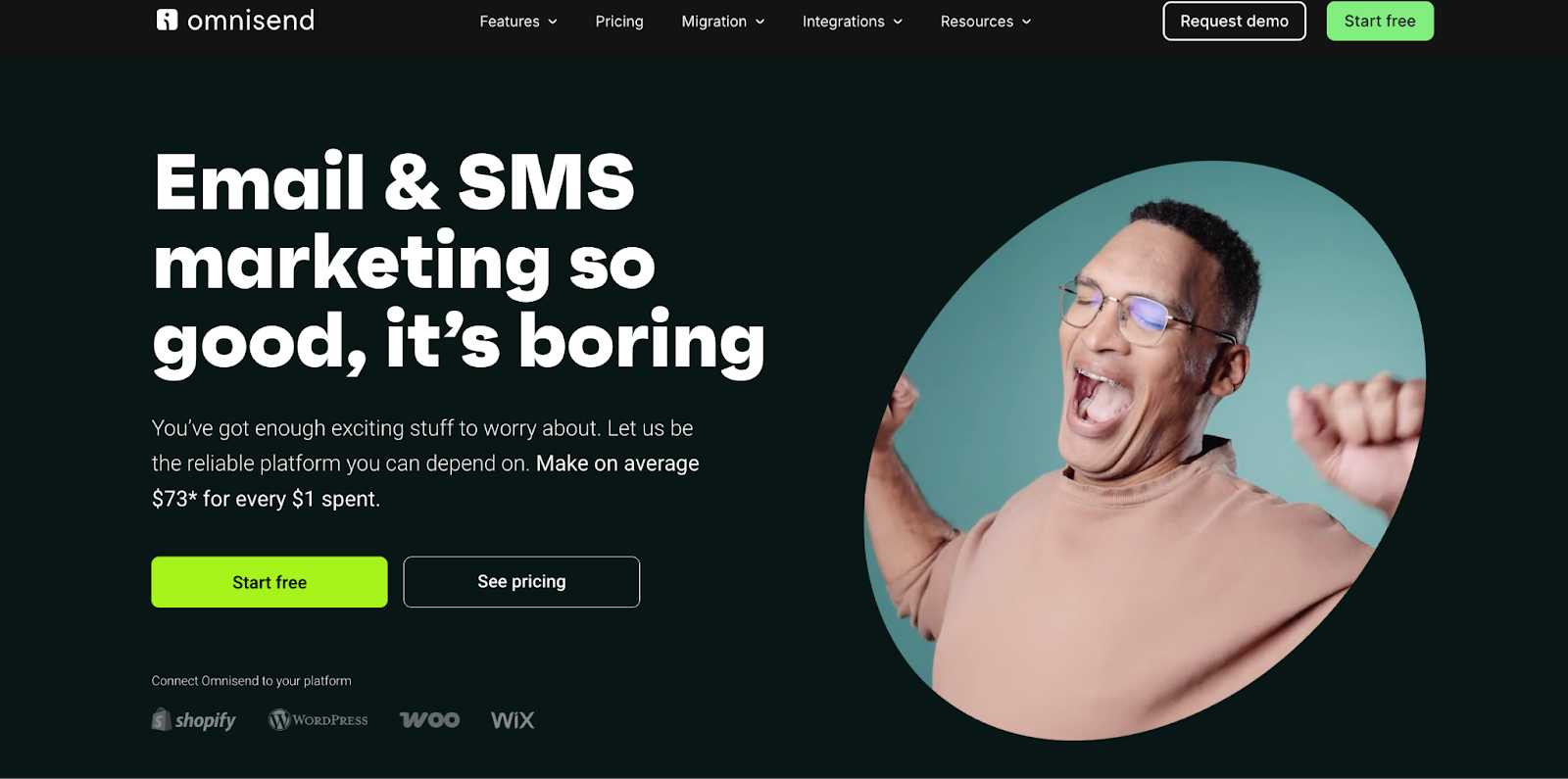 Image from Omnisend
Omnisend is an email and SMS marketing platform built specifically for ecommerce brands on Shopify, WooCommerce, BigCommerce, Wix, and other major platforms. It focuses on powerful automation, intuitive workflows, and channel unification so you can run email, SMS, and web push from one place.
Where it really stands out as a Sendlane alternative is the mix of ecommerce-first features and a much more forgiving pricing model.
Key features
- Omnichannel automation with email, SMS, and web push in the same workflows
- Product-based automations (browse abandonment, cart recovery, post-purchase)
- Rich signup forms, including wheel-of-fortune gamified popups
- Prebuilt workflow library for welcome, winback, cross-sell, and BFCM flows
- Deep integrations with Shopify, WooCommerce, and other ecommerce platforms
Pricing
- Free plan: Up to 250 contacts, 500 emails/month, plus SMS credits and core automation features
- Paid plans: Standard starts around $16/month for 500 contacts, while Pro adds higher sends and SMS credits, with pricing scaling by list size
Omnisend pros and cons
- Powerful ecommerce automations without a heavy learning curve
- Forever free plan with access to core ecommerce features
- Unified email, SMS, and web push inside the same flows
- 24/7 support on all plans, with strong reviews for responsiveness
- Reporting depth may feel light for very large enterprises
- No full CRM – focused on ecommerce marketing, not sales pipelines
Both tools offer email, SMS, and ecommerce-centric automation. The big differences are structure and cost.
Sendlane pricing is send-based and starts at a higher monthly minimum, with no forever-free plan. Omnisend offers contact-based pricing with a free tier, providing you with space to test and grow before committing your budget.
Sendlane vs. Omnisend
Omnisend also adds web push notifications into the same workflows and includes gamified list-building forms that Sendlane doesn’t provide natively. For brands that rely heavily on BFCM and seasonal campaigns, user discussions highlight Omnisend as a more stable, “safe bet” during peak sending, especially compared to reports of Sendlane delays and deliverability issues in those periods.
Alas, a notable insight from community discussions comes from InboxFortress, an agency that moved several clients from Yotpo and Sendlane to Omnisend. Their reasoning was simple: “Omnisend is a better choice when you take all into consideration,” pointing to better IP pools, stronger support, and more reliable performance during peak sales periods like BFCM.
2. Klaviyo – best for enterprise data
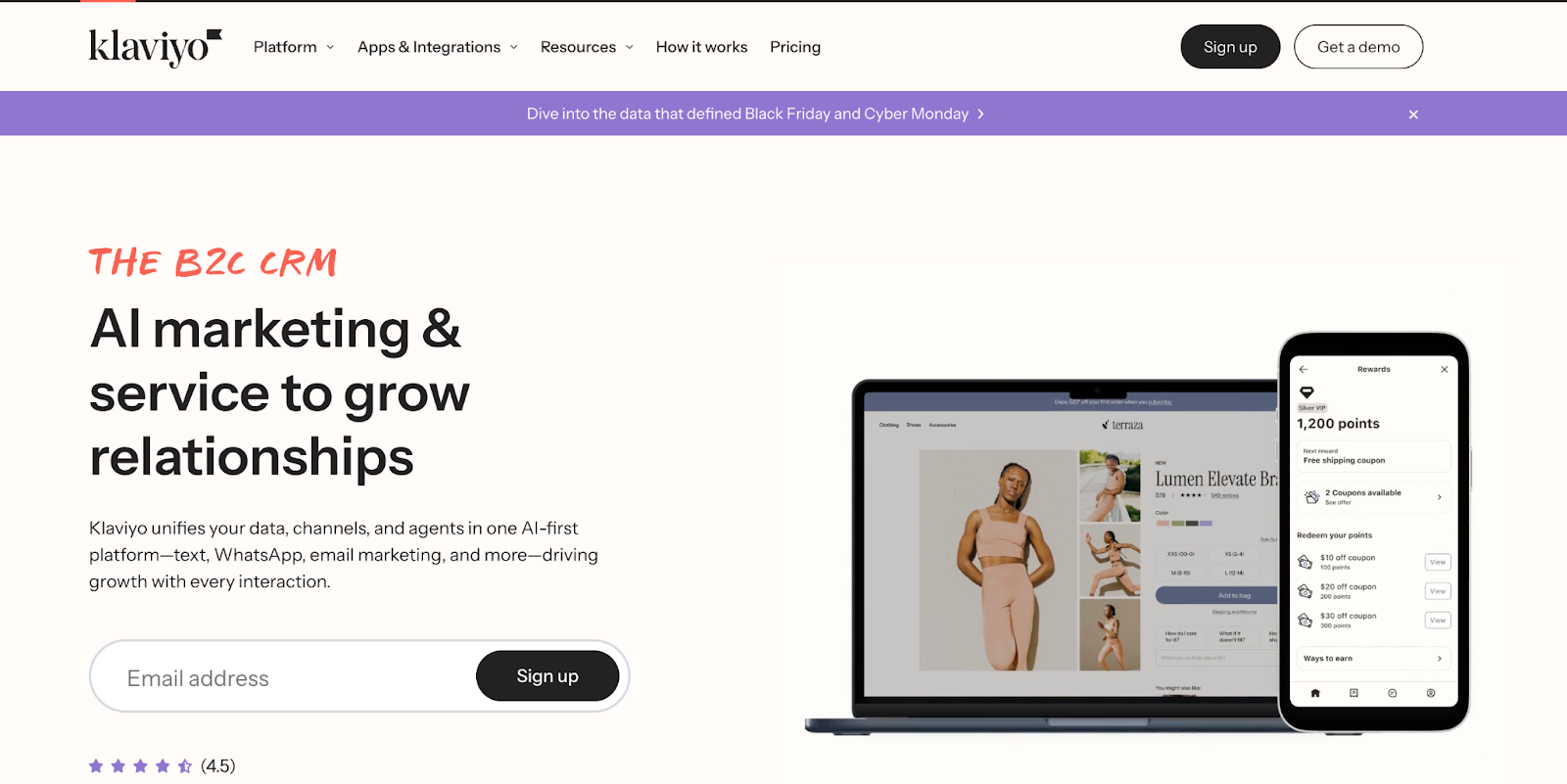 Image from Klaviyo
Klaviyo is one of the most widely recognized email and SMS platforms in ecommerce, particularly among mid-market and enterprise brands. It competes directly with tools like Sendlane on data depth and segmentation, and is often positioned as a “heavyweight” solution for teams that want advanced predictive analytics and are willing to take on added cost and complexity.
For brands that actively use predictive insights in decision-making, this depth can be valuable. For many teams, however, the added complexity and higher price can outweigh the incremental benefits unless advanced analytics are a genuine requirement.
Key features
- Advanced behavioral segmentation across email and SMS
- Predictive analytics, including churn risk and expected customer lifetime value
- Strong Shopify and broader ecommerce platform integrations
- Extensive library of ecommerce-focused automations and templates
Pricing
- Subscriber-based pricing, with email plans starting around $20/month for up to 500 contacts and increasing as your list grows
- Email and SMS bundles include messaging credits and typically start at higher price points depending on region and volume
Klaviyo pros and cos
- Very strong data modeling and predictive capabilities
- Very strong data modeling and predictive capabilities Large ecosystem of ecommerce brands, agencies, and partners
- Broad integration library across ecommerce tools
- Costs can scale quickly as subscriber counts and send volumes increase
- Steeper learning curve, particularly for smaller teams or less experienced marketers
- Advanced features may exceed what many teams realistically need day to day
Sendlane vs. Klaviyo
Both platforms sit in a similar tier for ecommerce-focused brands that prioritize detailed data and complex automations.
Sendlane can be more flexible for high-volume senders, though its pricing is less predictable. Klaviyo’s subscriber-based model may appear simpler at first, but expenses tend to rise quickly as lists grow. For brands operating at higher revenue levels with dedicated marketing resources, Klaviyo can be a strong fit thanks to its predictive analytics and extensive integration ecosystem.
For teams where budget predictability, usability, and faster time-to-value matter more, platforms like Omnisend or Moosend often feel more sustainable long-term than either Sendlane or Klaviyo.
3. Mailchimp – best for generalists
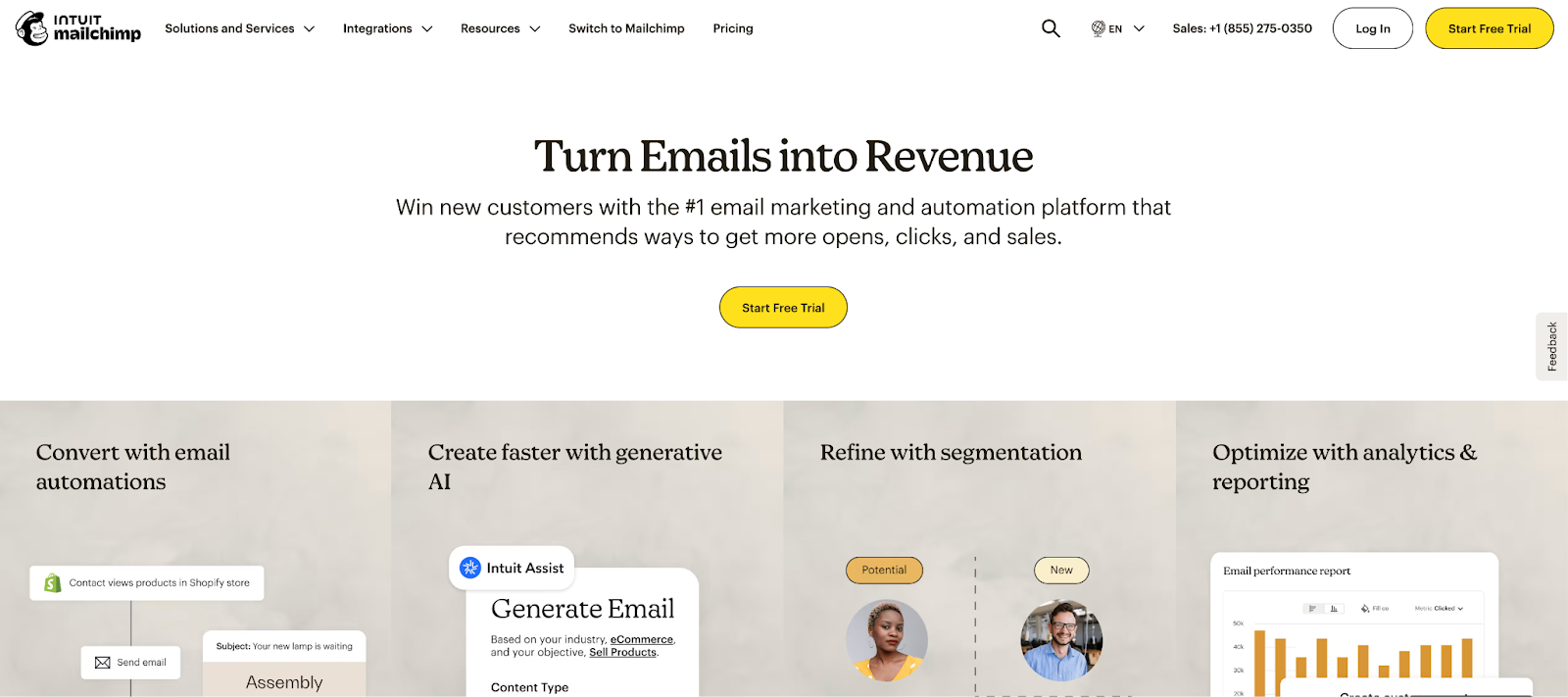 Image from Mailchimp
Mailchimp is the classic “everyone started here” email platform. It’s evolved into a broader marketing platform, but at its c,ore it’s still a very accessible option for small businesses, creators, and non-ecommerce projects that want email, simple automations, and basic CRM features.
Key features
- Drag-and-drop email builder with many templates
- Basic marketing CRM with tags, audiences, and simple pipelines
- Landing pages, forms, and basic social ads integrations
- Simple multistep automations for welcome, birthday, and reminders
Pricing
- Free plan: Up to 500 contacts and 1,000 monthly email sends
- Paid plans start around $13–$20/month for 500 contacts, adding more templates, automation, and reporting
Mailchimp pros and cons
- Low barrier to entry for small and non-technical teams
- Wide integration ecosystem for general business tools
- Familiar interface for many marketers
- Ecommerce features are not as deep as Sendlane or Omnisend
- Shopify integration is historically weaker and may require extra setup
- Automation and segmentation are less powerful than specialist ecommerce tools
Sendlane vs. Mailchimp
If you run a serious ecommerce operation, Sendlane will feel better suited to product-based automation and revenue tracking than Mailchimp.
However, if you’re more generalist (local services, content sites, simple stores) and you want to keep costs down, Mailchimp’s free and entry-level plans are significantly more accessible than Sendlane’s volume-based tiers. The trade-off is less ecommerce depth but a much more straightforward experience.
4. HubSpot – best for CRM & B2B
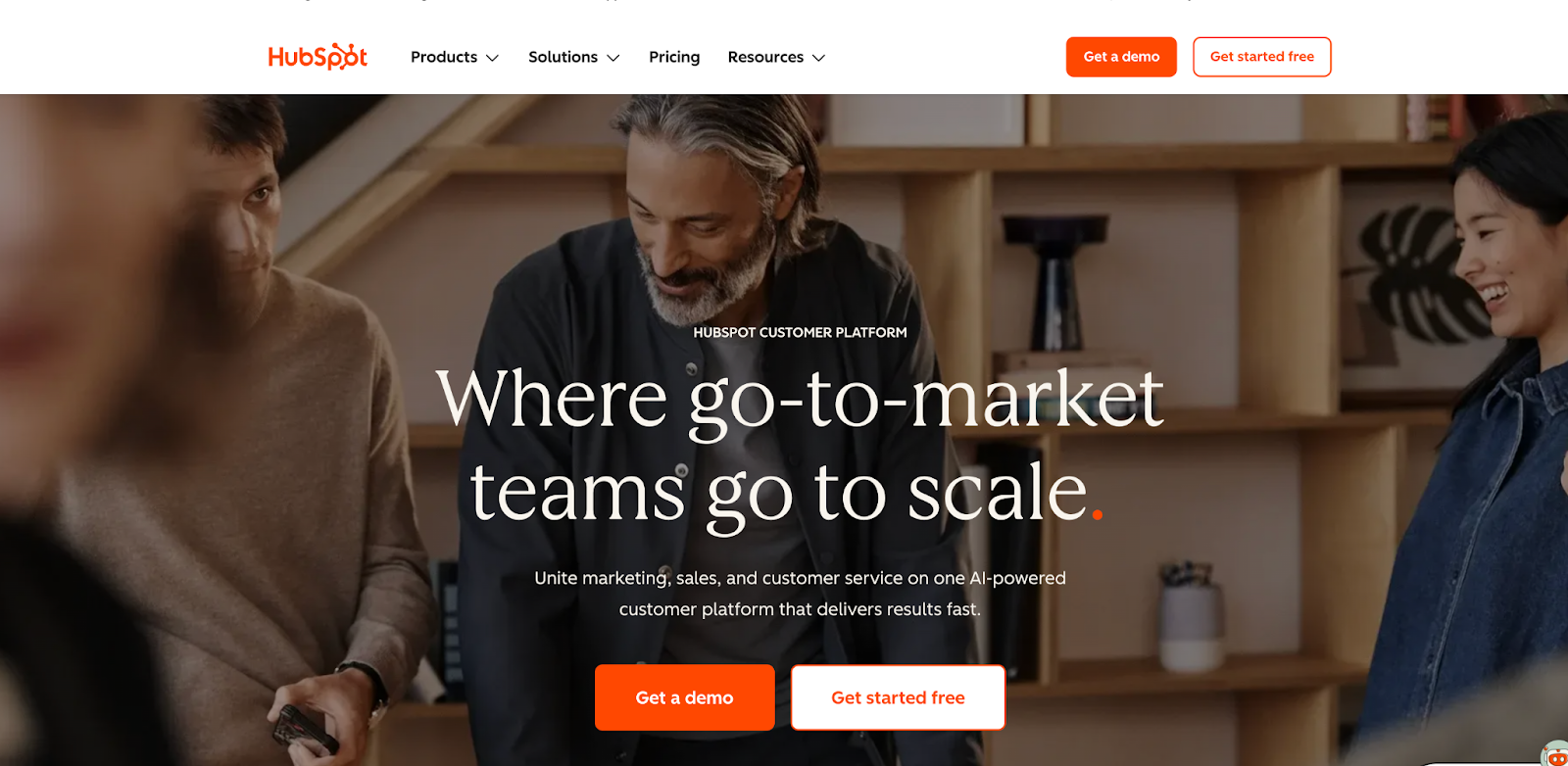 Image from HubSpot
HubSpot is a full CRM platform with marketing, sales, and service hubs. It’s generally too advanced if you’re just sending newsletters, but it’s extremely useful if you run B2B, SaaS, or high-ticket sales that require human reps, pipelines, and multi-touch journeys.
Key features
- Unified CRM with contacts, companies, and deals
- Marketing automation that ties directly to sales actions
- Website, blog, and landing page builder
- Reporting across marketing and sales performance
Pricing
- Free CRM with basic email tools and forms
- Marketing Hub paid plans start at a relatively low tier but increase substantially as contacts and features scale, especially on Professional and Enterprise
HubSpot pros and cons
- True “single source of truth” for contacts and deals
- Deep alignment between marketing and sales workflows
- Strong content and website tools built in
- Quickly becomes expensive beyond starter tiers
- Overkill if you don’t need CRM, sales pipelines, or content tools
Sendlane vs. HubSpot
Sendlane is made for ecommerce automation, whilst HubSpot is made for sales teams and long lead cycles.
If you sell software, high-ticket services, or complex B2B solutions, HubSpot lets you build automations that create deals, assign owners, and score leads in a way Sendlane simply isn’t built to handle. On the other hand, if your main revenue driver is Shopify orders, HubSpot may feel bloated and unnecessarily expensive.
5. Drip – best for visual automation
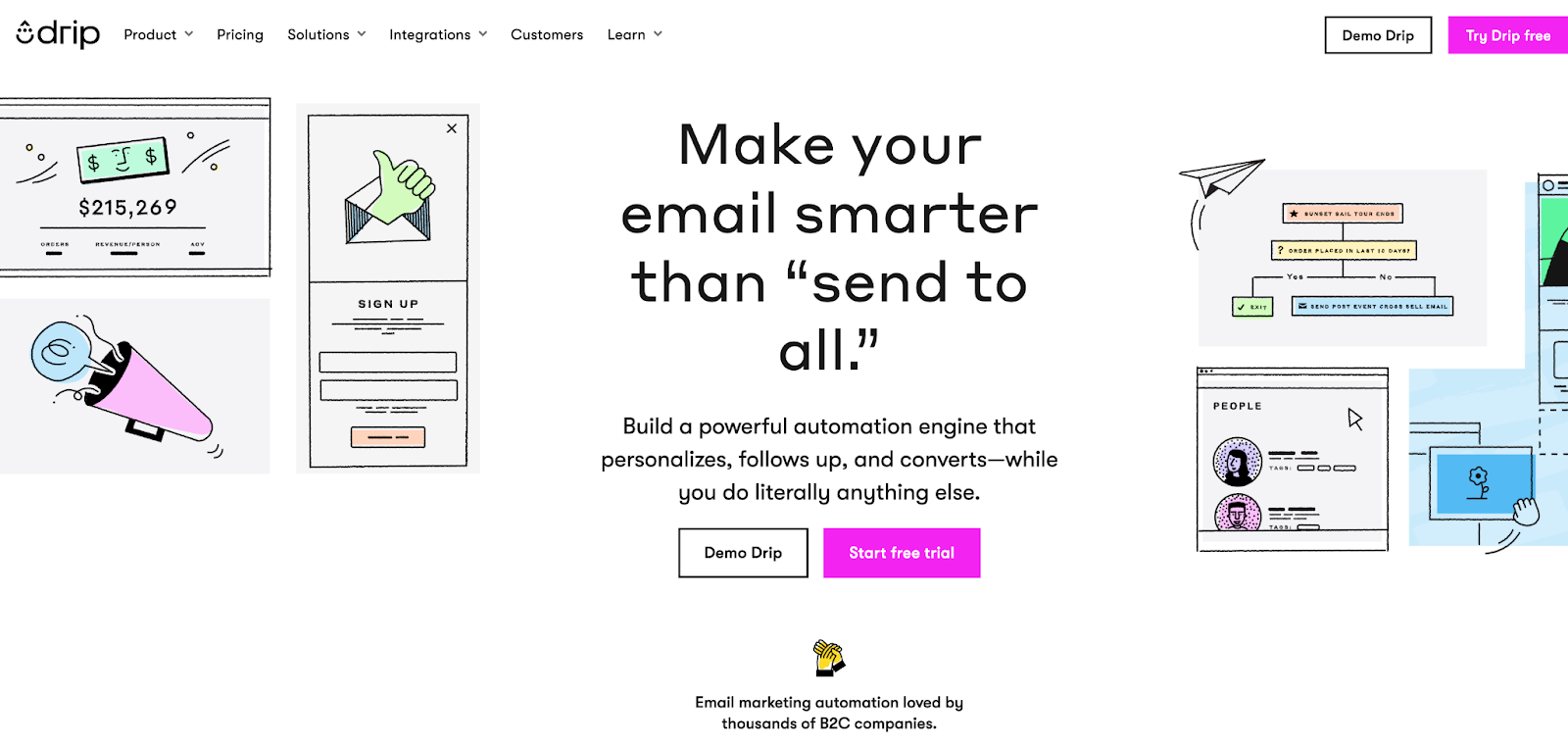 Image from Drip
Drip is an ecommerce marketing platform known for its colorful, highly visual workflow builder. It targets DTC brands that care about customer journeys and want more control over segmentation and multi-step flows.
Key features
- Visual automation builder
- Ecommerce integrations (Shopify, WooCommerce, etc.)
- Revenue reporting for automated workflows and campaigns
- Strong tagging and behavior-based segmentation
Pricing
- Pricing starts around $39/month for up to 2,500 contacts, with unlimited emails in that tier
Drip pros and cons
- Excellent visual representation of customer journeys
- Unlimited email sends at lower tiers
- Solid ecommerce-focused features
- No free-forever plan
- Support is not 24/7, which can matter for global brands
- Pricing is still high for very small stores compared to “freemium” tools
Sendlane vs. Drip
Drip and Sendlane appeal to similar ecommerce brands, but their strengths differ slightly.
Sendlane includes strong SMS capabilities and 24/7 support, while Drip leans harder into a polished, visual automation experience and unlimited sends based on contacts. If you value seeing your flows mapped clearly and you’re comfortable paying for a mid-tier plan, Drip can feel more intuitive than Sendlane’s linear workflows.
6. Moosend – best for budget
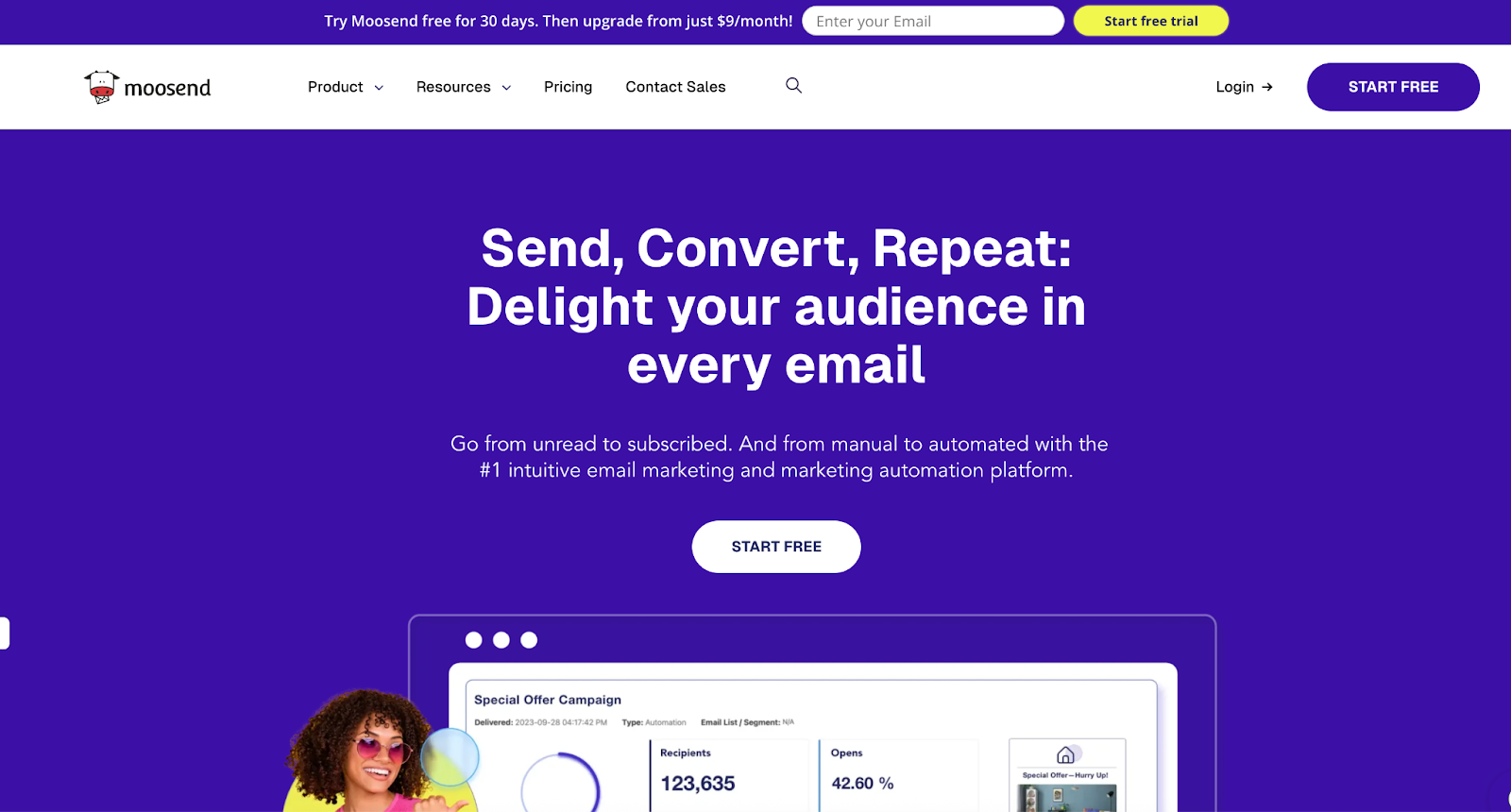 Image from Moosend
Moosend focuses on bringing solid email marketing and automation features to smaller businesses at a more accessible price point. It’s often recommended in discussions where Sendlane or Klaviyo feel out of reach.
Key features
- Drag-and-drop email editor and templates
- Visual automation workflows
- Basic segmentation and personalization
- Landing pages and subscription forms
Pricing
- No permanent free plan – paid plans start around $9/month for up to roughly 500–1,000 subscribers, depending on current offers.
Moosend pros and cons
- Very strong price-to-feature ratio for small lists
- Automation tools that punch above the price point
- Good option for boutiques, small brands, or side projects
- Less advanced ecommerce and SMS capabilities than Sendlane
- Fewer deep native integrations for larger tech stacks
Sendlane vs. Moosend
If your brand is still small or testing email seriously for the first time, Sendlane’s $100-ish entry point can feel like too much. Moosend offers a significantly lower barrier to entry while still providing access to automation and segmentation features that are sufficient for many early-stage stores.
You’ll trade away some ecommerce depth and multi-channel capability, but for lean teams and limited budgets, Moosend is a logical Sendlane alternative to consider.
7. GetResponse – best for webinars & info products
 Image from GetResponse
GetResponse is a marketing suite that combines email, funnels, and webinar hosting. It works well for ecommerce, but it truly shines for info product creators, educators, and hybrid brands that want to run both stores and webinars under one roof.
Key features
- Email marketing with automation workflows
- Native webinar hosting (live and on-demand)
- Conversion funnels and landing pages
- AI-assisted content and course creation tools
Pricing
Paid plans typically start around $19/month for up to 1,000 contacts, with unlimited emails, and scale up with list size and features.
GetResponse pros and cons
- Unique native webinar engine compared to Sendlane
- Strong funnel and landing page tools
- Good fit for education-driven and content-heavy businesses
- No permanent free plan beyond limited trials or promos
- Can feel complex if you only want straightforward ecommerce email
Sendlane vs. GetResponse
Sendlane wins for pure ecommerce focus, while GetResponse wins if your model includes live training, evergreen webinars, or course funnels.
If your main revenue comes from launches, webinars, and content-led events, the fact that GetResponse bundles webinar hosting, email, and pages in one stack is a major advantage over Sendlane, which would require external tools for that part of your funnel.
8. Encharge – best for SaaS
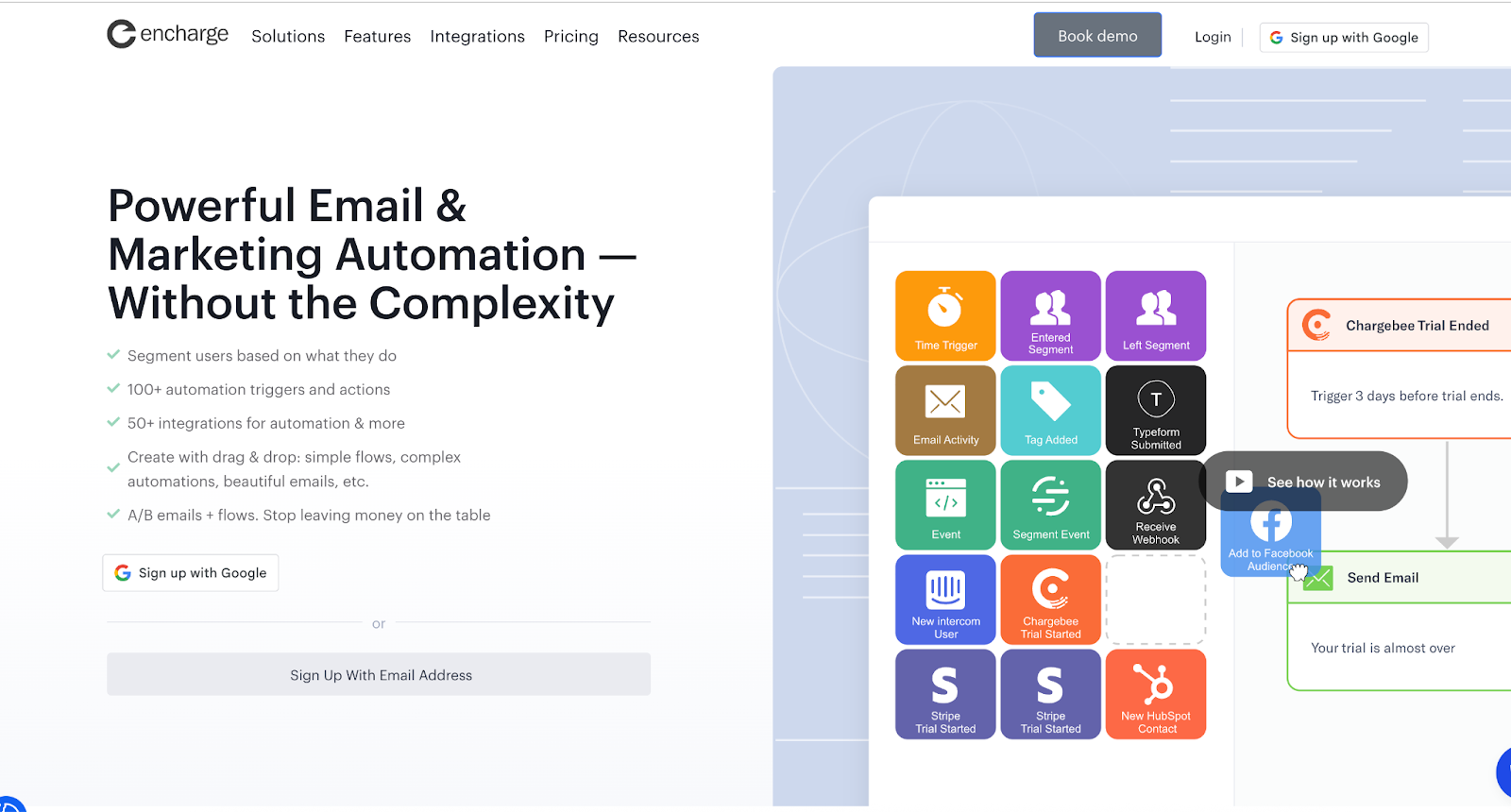 Image from Encharge
Encharge is an email automation platform designed for SaaS companies. Instead of focusing on “ordered product” events from Shopify, it tracks in-app behavior, billing actions, and product usage to trigger personalized, lifecycle-driven campaigns.
Key features
- Visual flow builder tailored to SaaS journeys
- Deep integrations with Stripe, Paddle, Segment, and popular CRMs
- Behavior tracking inside your app (clicked feature, completed onboarding step, etc.)
- Revenue and lifecycle reporting around upgrades, churn, and expansion
Pricing
Pricing usually starts at a few hundred dollars per month, depending on contact count and feature bundle, with occasional lifetime or discounted deals via marketplaces
Encharge pros and cons
- Built specifically for SaaS behavior and billing events
- Strong integrations with product and data tools
- Supports complex user journeys like trial
- Not aimed at classic ecommerce – Shopify/WooCommerce are not the focus
- Higher entry point than basic newsletter tools
Sendlane vs. Encharge
This is an “apples vs oranges” comparison. Sendlane is built for ecommerce stores and DTC brands. Encharge is built for product-led growth SaaS companies.
If you care more about “logged in, used feature X three times” than “added product Y to cart,” Encharge is a better fit. If you sell physical goods and need abandoned cart flows, Sendlane or Omnisend is the better category.
9. ActiveCampaign – best for advanced logic
 Image from ActiveCampaign
ActiveCampaign blends email marketing, advanced automation, and lightweight CRM capabilities. It’s used by ecommerce, B2B, and service businesses that want powerful control over triggers, conditions, and multi-channel campaigns.
Key features
- Powerful automation builder with complex branching logic
- Sales CRM with pipelines and tasks
- Email, SMS, and site messaging tools
- 900+ integrations with ecommerce, CRM, and other platforms
Pricing
- Starter plans begin around $15/month for 1,000 contacts, with pricing scaling as your database grows and as you move to Plus, Pro, and Enterprise tiers
ActiveCampaign pros and cons
- Extremely flexible automation options
- Combined marketing, and light CRM in one platform
- Suitable for ecommerce and non-ecommerce models
- No permanent free plan
- Interface and automation options can feel overwhelming at first
Sendlane vs. ActiveCampaign
If automation logic is your obsession, ActiveCampaign usually wins. It supports deep branching, split tests inside workflows, and smooth coordination with sales pipelines and CRM records.
Sendlane may feel simpler if you’re purely an ecommerce and want email and SMS without additional sales tools. But for brands that need both marketing and sales automation, ActiveCampaign is a more complete platform.
10. Brevo (formerly Sendinblue) – best for transactional
 Image from Brevo
Brevo (formerly Sendinblue) is a popular platform that combines marketing email, transactional email, SMS, and basic CRM features. It’s known for flexible, send-based pricing and strong international SMS support.
Key features
- Email campaigns and marketing automations
- Transactional email for order confirmations, password resets, etc.
- SMS and WhatsApp messaging with broad geographic coverage
- Simple CRM and pipeline tools
Pricing
- Free plan: Up to 300 emails per day with branding
- Paid plans: Start at around $9/month for 5,000 monthly emails, scaling by volume and features
Brevo pros and cons
- Combines marketing and transactional email in one platform
- Free plan based on sends, not contact count
- Strong international SMS capabilities
- Branding on the free tier
- Automation and reporting are not as deep as specialist ecommerce tools
Sendlane vs. Brevo
Both tools use send-based pricing, but Brevo offers a free tier with daily send limits, whereas Sendlane only offers time-boxed trials.
If you need transactional email and global SMS, Brevo is attractive. If your primary need is ecommerce retention, with a stronger focus on cart recovery and revenue-driven automations, Sendlane (or Omnisend) will be a more tailored solution for your use case.
11. Constant Contact – best for simplicity and offline events
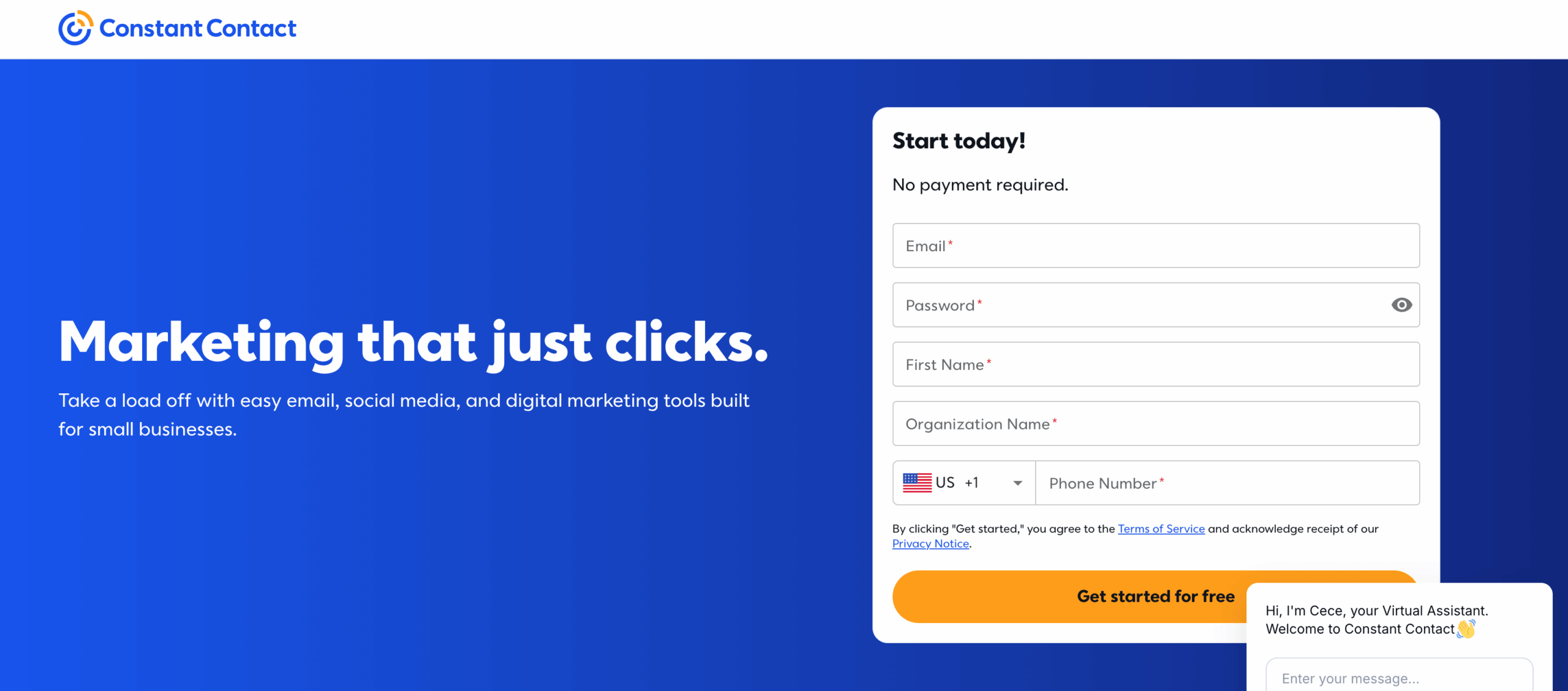 Image from Constant Contact
Constant Contact has been around for a long time and caters mostly to small businesses, nonprofits, and local organizations that want to run newsletters, basic automations, and event marketing.
Key features
- Email campaigns with templates
- Event registration, RSVPs, and surveys
- Basic automation for welcome and follow-up campaigns
- Social media posting and simple ad integrations
Pricing
- Plans generally start around $12/month for small lists, with prices increasing based on contact count and feature packages
Constant Contact pros and cons
- Straightforward interface for non-technical users
- Strong event and local marketing focus
- Helpful for nonprofits and community organizations
- No free forever plan
- Automation and ecommerce focus is weaker than Sendlane or Omnisend
Sendlane vs. Constant Contact
If your main work is local events, workshops, or community engagement, Constant Contact has tools that Sendlane simply doesn’t prioritize, such as event registrations and RSVPs.
For ecommerce-first brands, though, Constant Contact will feel limited. Sendlane and its closest alternatives (Omnisend, Drip, Klaviyo) offer far more around ecommerce data, product feeds, and revenue-attributed automation.
Conclusion and final verdict
Sendlane is a capable retention marketing platform, but its pricing model, learning curve, and ecommerce-only focus aren’t ideal for every brand. If you’re researching Sendlane alternatives, you’re probably looking for one of three things: better ROI, more predictable costs, or a platform that fits your actual business model.
Across the tools in this guide, three stand out for most ecommerce brands:
- Omnisend for ecommerce businesses that want strong automations, predictable contact-based pricing, and a generous free plan
- Klaviyo for larger ecommerce brands that need deep customer data and predictive analytics, and are prepared for higher costs as they scale
- Moosend for smaller shops that want modern automation without a premium price tag
If growth and long-term sustainability are your priorities, Omnisend tends to offer the best balance of performance and pricing. It lets you build revenue-driving automations, test campaigns, and scale your list from 0 to meaningful revenue before asking much from your budget, thanks to its forever-free plan and lower entry-level tiers.
FAQs
What’s the best platform for email marketing?
It depends on what you sell and how you sell it:
- Ecommerce brands: Omnisend and Sendlane are both strong, with Omnisend typically offering better pricing flexibility and extra channels like web push. Klaviyo targets large enterprise brands with strong capabilities, though it comes with much higher pricing.
- Creators and solo businesses: Mailchimp or ConvertKit work well if you prioritize content, newsletters, and simple funnels.
- B2B & SaaS: HubSpot, ActiveCampaign, or Encharge are usually better fits, because they combine marketing with CRM or product usage tracking.
The “best” platform is the one that aligns with your revenue drivers, not the one with the most features on a comparison chart.
Is there a better alternative to Mailchimp?
If you’ve outgrown Mailchimp or find it limiting, there are good alternatives:
- For ecommerce: Omnisend is often a better Mailchimp alternative. It offers stronger ecommerce automations, dynamic product feeds, and omnichannel campaigns for email, SMS, and push.
- For budget: Moosend can offer comparable or better automation than Mailchimp at lower or similar prices, particularly once you move past the free tier.
Mailchimp is still fine for basic newsletters and small mixed-model businesses, but if ecommerce is your main growth engine, switching to an ecommerce-first platform usually pays off.
Who competes with Outreach?
Outreach is a sales engagement platform for outbound sales teams: sequences, dialers, LinkedIn touchpoints, and activity tracking. It’s built for cold outreach and sales pipelines, not opt-in marketing.
Key Outreach competitors include:
- Salesloft – focused on sales engagement and cadences
- Apollo – combines a large B2B data set with sequences and enrichment
Tools like Sendlane, Omnisend, and Klaviyo operate in a different category: they manage opt-in marketing for existing subscribers and customers, not cold outbound campaigns.
What is better than SendGrid?
SendGrid is primarily a cloud email API for delivering transactional and bulk emails. It’s excellent for developers who need reliable infrastructure, but it doesn’t offer the same level of marketing-focused features out of the box.
Depending on your needs:
- For marketing automation and ecommerce: Sendlane or Omnisend are better than SendGrid because they provide visual builders, automations, segmentation, and revenue reporting layered on top of delivery.
- For raw email infrastructure: Alternatives like Amazon SES or Postmark are strong if you just want APIs with good deliverability and you’ll build your own front-end logic.
If you don’t have an engineering team or you want campaigns, flows, and list management handled in one interface, a marketing platform is usually a more realistic choice than a pure email API.
Our team strives to be accurate and unbiased in reviewing email tools. However, we recognize that mistakes can happen, and it’s essential for us to stay up to date. If you come across any errors or things that need to be reviewed again, please let us know.

Individuals who want to produce their own content are limited by geometry dash lite‘s absence of a level creator.